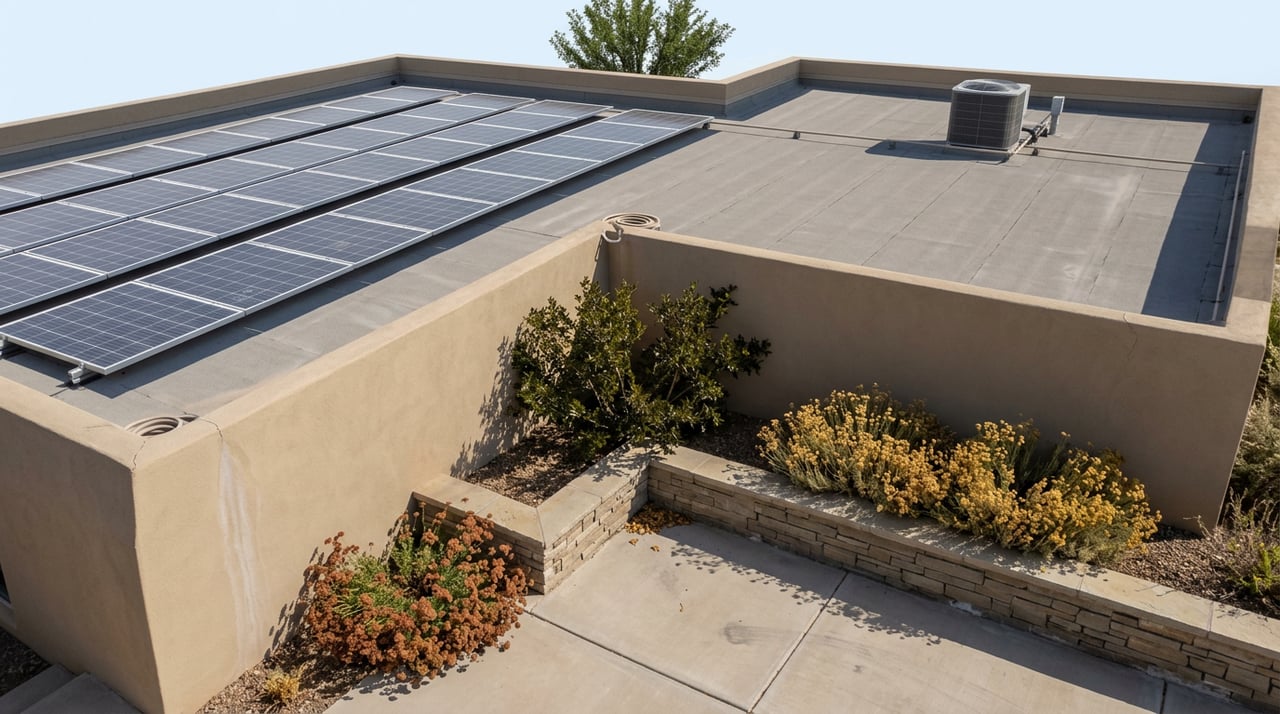
"Solar is pretty much the wild west out here." A Henderson broker said that to the Las Vegas Review-Journal late last year, describing what happens when a home with rooftop solar hits the market and nobody can get the installer on the phone. It is a Southern Nevada quote, but the mechanics behind it are statewide, and they show up in Reno resale transactions just as often. The panels themselves rarely cause a problem. The paperwork attached to them does.
If you are buying or selling a solar-equipped home in Reno, Sparks, or anywhere in Washoe County this year, the thing worth understanding before you write or accept an offer is not whether the roof has panels. It is which of three contracts sits behind them, and a fourth detail almost nobody asks about: the date the system was interconnected to the grid. That single date can lock in a rate for twenty years, and it travels with the house, not the person who installed it.
Three Panels, Three Very Different Deals
A solar array can arrive at closing in one of three forms, and each one changes what happens next.
An owned system, paid for outright or already paid off, conveys with the house like any other fixture. There is nothing to assume, nothing to qualify for, and nothing on title that needs to be released. This is the clean version of the transaction.
A financed system usually carries a UCC-1 filing, a type of lien recorded against the equipment. Title and escrow need to confirm that lien is satisfied or transferred before the deed can record. It is a documented step, not usually a dealbreaker, but it has to happen on schedule.
A leased system or a power purchase agreement is a different animal entirely. The homeowner never owned the panels. A third party did, and that company has a contract that has to be resolved, either by the buyer assuming it or the seller paying it off, before the sale can close cleanly.
The Rate Locked to the Address, Not the Owner
Here is the part that gets skipped in most solar-and-real-estate guides, including the national ones a Reno seller is likely to find first.
Nevada's net-metering framework, set by the legislature under Assembly Bill 405, pays solar homeowners a credit for excess energy sent back to the grid. That credit rate is tiered, and the tiers have moved over time. Customers who signed up in the earliest tier, back when the program launched in 2017, locked in a credit worth 95 percent of the retail electric rate. That tier filled up and closed once it hit its capacity cap in August 2018. Anyone connecting a new system in Nevada today lands in the current tier, which pays 75 percent of retail.
The rate a system locks in is guaranteed for 20 years from the date it was interconnected, and that guarantee runs with the property, not the person who signed the original paperwork. A Reno home with a system interconnected back in 2017, before that first tier filled up, can still be sitting on that better 95 percent rate for another decade or so. A brand-new system installed this year starts at 75 percent, full stop.
That means two houses on the same street, with similar-looking arrays on similar roofs, can carry meaningfully different economics depending only on when the interconnection paperwork was filed. For a buyer evaluating a solar home, the interconnection date is worth asking for. For a seller, it is worth pulling out and putting in front of your agent before the home goes on the market, because it is a selling point that has nothing to do with panel age or efficiency.
A solar lease does not just come with a monthly payment. It comes with its own credit check, its own paperwork, and its own timeline that runs alongside the mortgage approval, not inside it.
What Actually Slows a Solar Closing Down
Nevada's Seller's Real Property Disclosure form requires sellers to state whether a solar system is owned, financed, or leased, and to provide the relevant documentation. Skipping that step is not a minor omission. There is a documented case where a listing agent's MLS entry implied solar came with the unit, the transfer disclosure did not mention a lease, and the buyer only found out from a separate questionnaire signed after the contract was already in place. The buyer went forward with the purchase, but the dispute that followed was entirely avoidable.
If the system is leased or under a PPA, the buyer has to qualify for the assumption the same way they qualify for a mortgage. Solar companies typically run a credit check, often looking for a score around 680 or higher, and will not approve the transfer without it. That process, plus the paperwork exchange between the buyer, the seller, the solar company, and both lenders, commonly adds two to four weeks to a closing timeline. Companies vary widely in how fast they move. Some solar lease providers process transfer paperwork in days. Others, by their own customers' accounts, can take weeks to return a call.
If the lease does not transfer, the seller's remaining option is a buyout, paying off the balance before closing so the buyer takes the system free and clear. Buyout figures vary by company, system size, and years remaining on the contract, but they commonly range from around $5,000 on the low end to $40,000 or more for a newer system with a long lease term left.
Before You List, or Before You Offer
- Find the original solar agreement and read the transfer, assignment, and buyout sections before doing anything else.
- Call the company that owns or financed the system and ask specifically for their transfer or assumption process, not just general customer service.
- Get the interconnection date and current net-metering tier in writing. It affects value even when the panels themselves are unremarkable.
- If the system is leased, get the exact buyout figure quoted before you counter an offer or accept one.
- Confirm the disclosure paperwork actually states the ownership status in writing, not just verbally between agents.
- If you are buying, bring the solar agreement to your lender early. A lease payment can count as debt against your qualifying ratio the same way a car payment does.
What Changed in the Math This Year
Two policy shifts, one at the very start of this year and one this spring, change what this all means depending on when a system went in.
The 30 percent federal residential solar tax credit expired on December 31, 2025. A system placed in service before that date can still carry forward any unused credit for up to five tax years, but anything installed in 2026 does not qualify for it at all. A seller whose system went in during 2024 or 2025 got the benefit of that credit in their original cost. A buyer thinking about adding solar to a Reno home purchased this year is pricing the system without it.
NV Energy also added a new demand-style charge to residential bills this past April, which the utility estimated would raise the typical solar customer's monthly bill by around $12. It does not undo the savings from net metering, but it does mean even a strong-producing system still shows up on the bill every month. That is worth mentioning plainly in a listing rather than letting a buyer assume solar means no electric bill at all, since an overstated savings claim is the kind of thing that turns into a disclosure dispute later.
| System type | Conveys automatically | Buyer credit check required | Typical closing impact |
|---|---|---|---|
| Owned, paid off | Yes | No | None |
| Financed (loan/UCC-1) | Yes, after lien release | No | Lien payoff confirmed at escrow |
| Leased or PPA | No, requires assumption | Yes | Adds roughly 2 to 4 weeks |
What This Means If You're Buying or Selling
For sellers, the preparation work is mostly about paperwork you already have. Pull the interconnection date, confirm your net-metering tier, and get your ownership documentation in order before the home is listed rather than after an offer arrives. A Reno solar system with a strong locked-in tier is a legitimate talking point, not just a roof feature.
For buyers, the questions to ask are specific. Is the system owned, financed, or leased? What is the interconnection date and current net-metering tier? If it is leased, what is the monthly payment, the years remaining, and the buyout figure? Bring the answers to your lender early, because a lease payment factored into your debt-to-income ratio late in the process can change your approval.
A Few Questions Worth Asking
Does a solar lease affect my ability to qualify for a mortgage? Yes, in most cases. A monthly lease or PPA payment is typically counted as a recurring debt obligation, the same way a lender would count a car payment, and it factors into your debt-to-income ratio.
Do I have to disclose solar even if the system is fully paid off? Yes. Nevada's disclosure form asks about ownership structure regardless of whether the system is owned, financed, or leased. A paid-off system is simple to disclose, but it still needs to be documented in writing.
What if the solar company is slow to respond during my transaction? Build extra time into your closing timeline from the start. Response speed varies a great deal by company, and starting the transfer paperwork the day you list, rather than after you accept an offer, is the difference between a smooth closing and a stalled one.
If you are weighing a Reno purchase or sale that involves solar, or you just want a straight answer on what a specific system means for your timeline, Mirie Linton has spent years working through exactly this kind of detail with Northern Nevada buyers and sellers. Let's Connect.