Ask five people what happens to a short-term rental permit when a Tahoe house changes hands, and most will guess it stays with the property, the way a certificate of occupancy does. Ask what happens to a stormwater compliance requirement, and most will guess it's the seller's problem to clear up before closing, then it disappears. Both guesses are backwards.
On the Nevada shore of Lake Tahoe, in Incline Village, Crystal Bay, Zephyr Cove, Stateline, and Glenbrook, the two pieces of paperwork that matter most in a residential closing behave in exactly the opposite way from what buyers expect. One is tied to the dirt. The other is tied to the person who applied for it. Knowing which is which changes how you time an offer, what you negotiate in escrow, and whether the rental income on a listing sheet is actually yours to keep.
The Paperwork That Follows the Land
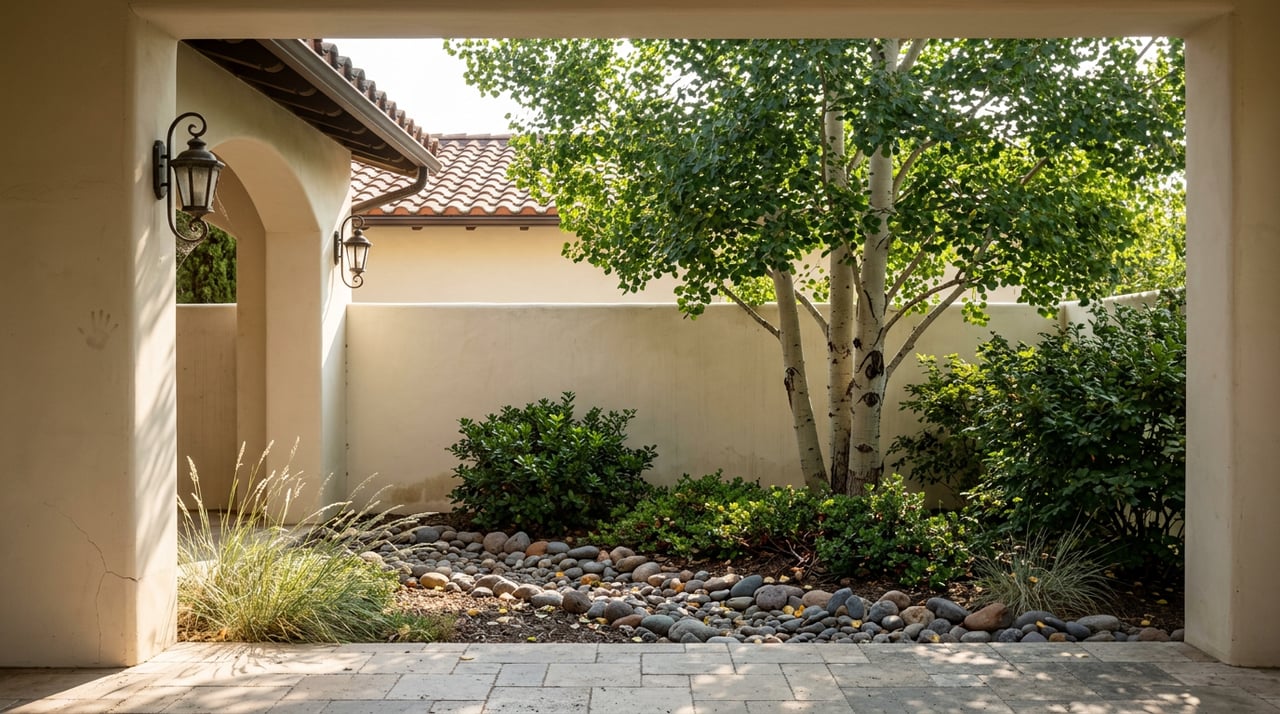
Every developed parcel in the Tahoe Basin, on both the California and Nevada sides, falls under Chapter 60 of the Tahoe Regional Planning Agency's Code of Ordinances, which requires property owners to install and maintain stormwater Best Management Practices, commonly called BMPs, and to hold a current BMP Certificate. The engineering standard behind the requirement is specific: BMPs must be sized to handle a 20-year, one-hour storm, roughly one inch of rain falling fast. In practice this looks like roof drip lines, driveway drains, and rain gardens designed to keep sediment and runoff out of the lake rather than off a homeowner's to-do list.
The certificate itself is tied to the parcel, not the owner. TRPA's own real estate guidance states plainly that a certificate stays valid and transferable for as long as the installed BMPs are maintained and continue to function. In other words, a well-built drainage system installed by an owner in 2016 can still be doing its job, and carrying its certificate, when the house sells in 2026. The obligation runs with the land. If the improvements fail or were never done, that failure runs with the land too, and it becomes the new owner's cost to fix, regardless of who let it lapse.
TRPA has flirted with making this even more explicit at the point of sale. In 2015, the agency's board considered a rule that would have withheld clear title until BMP work was fully completed before a home could close. The real estate community pushed back hard.
"This would have a catastrophic impact on the real estate community in Lake Tahoe," local mortgage broker Ron Yokotake told the board weighing the proposal.
The board settled on a lighter compromise: sellers must disclose BMP status to buyers using a TRPA real estate disclosure form, but a full certificate is not a hard condition of closing. Property owners who stay out of compliance can still face enforcement and fines under the Bi-State Compact, and those fines can run into the thousands per day, which is enough motivation for most owners to get the work done eventually, just not necessarily before your closing date.
Here is the catch for buyers: the Tahoe Sierra MLS does not carry a data field for BMP status, so it will not show up on a listing sheet. The only reliable way to check is to look up the parcel by APN through TRPA's tracking tools, or ask directly. Retrofit costs vary by lot, but contractors working in the basin regularly quote ranges from a few thousand dollars for a straightforward driveway drain to five figures for a property with difficult grading or shallow bedrock, plus a multi-month wait for inspection scheduling during peak season.
The Paperwork That Follows the Person
Short-term rental permits work the opposite way. The permit is issued to an applicant, tied to that person's compliance history, not to the house itself, and the two counties on Nevada's Tahoe shore handle what happens next quite differently.
In Incline Village and Crystal Bay, both governed by Washoe County's short-term rental ordinance under County Code Chapter 110, Article 319, a permit can be transferred to a new owner, but the county is explicit that this is not automatic. The buyer has to apply, pay the associated fees, and schedule an appointment with county planning staff before the transfer is recognized. Skip that step and the house is just a house again, no matter what the previous owner's booking calendar looked like. Permits also expire annually, on the last day of the month they were issued, and a missed renewal makes the permit null and void, forcing a full resubmission. Every application in Incline Village and Crystal Bay also requires a defensible space inspection from the North Lake Tahoe Fire Protection District before it's approved.
On the south shore, in Zephyr Cove, Stateline, and Glenbrook, Douglas County runs a different system entirely. Vacation Home Rentals have been permitted in the Tahoe Township by ordinance since 2005, but the county caps the total at 600 permits, with additional density limits by neighborhood on top of that overall ceiling. As of May 2026, roughly 556 of those 600 permits had already been issued, leaving about 44 available, and only in neighborhoods still classified as unconstrained. Existing permits are one per person, issued only to individuals or family trusts rather than commercial entities, and must be renewed annually with a Fire and Life Safety inspection scheduled through the Tahoe Douglas Fire Protection District at least 60 days ahead of the expiration date. Miss the renewal window and the county treats a new application as subject to whatever the cap looks like on that day, not the day the original owner got in.
The tier system inside the Douglas County program matters too. Tier 1 covers owner-occupied rentals capped at four guests and is excluded from the 600-permit count entirely. Tier 2 covers whole-home rentals up to 10 occupants and does count against the cap. Tier 3, anything larger, requires a separate special use permit application.
Here is a side-by-side of how the two systems compare for a buyer weighing them:
| Incline Village & Crystal Bay (Washoe County) | Zephyr Cove, Stateline & Glenbrook (Douglas County) | |
|---|---|---|
| Governing program | County STR ordinance, Code Ch. 110, Art. 319 | Vacation Home Rental (VHR) program, in place since 2005 |
| Numeric cap | None, but occupancy, parking, and septic capacity act as a practical ceiling | Hard cap of 600 permits township-wide |
| Standing as of May 2026 | No fixed count, governed by tier and physical constraints | About 556 of 600 issued, roughly 44 open in unconstrained areas |
| Transfer at sale | Administrative transfer possible, but not automatic; buyer must apply and pay fees | Not addressed as automatic; annual renewal required or permit lapses |
| Inspecting agency | North Lake Tahoe Fire Protection District | Tahoe Douglas Fire Protection District |
What This Changes If You're Buying for the Income
A listing that shows strong Airbnb or Vrbo history tells you what the house has earned under someone else's permit. It does not tell you what the house can earn under yours. Before writing an offer on a property you plan to operate as a short-term rental, a few steps save real money and real time.
- Ask the seller for the permit number and tier, then confirm current status with the county rather than taking the listing sheet's word for it.
- Check the renewal date. A permit that lapses between your offer and your closing resets the clock and may land your application in a different cap environment than the one the seller enjoyed.
- In Douglas County, ask whether the property's neighborhood is still accepting applications outside the waitlist, since density limits can close off specific areas well before the township-wide cap of 600 is reached.
- Look up the parcel's BMP certificate status before you're deep into escrow, since a missing certificate is a cost you inherit, not a cost the seller necessarily has to clear first.
- Build the fire inspection scheduling window, often 60 days out, into your expected timeline to legal operation, not just your closing timeline.
None of this means the rental math doesn't work. It means the math depends on paperwork that has to be re-earned, not simply inherited.
What This Changes If You're Selling
If you're selling a permitted rental, the permit itself may not be yours to hand over, but nearly everything that made it valuable is. Booking history, guest reviews, a documented compliance record, and proof that the property has passed its fire inspections year after year all help a buyer's application move faster and give them real evidence they can operate successfully once they secure their own permit. Sellers without a current BMP certificate are often better served by getting the parcel evaluated before listing, since surprises that surface during a buyer's inspection period tend to cost more in negotiating leverage than the retrofit itself.
A Few Questions Worth Asking Before You Write an Offer
Does a BMP certificate expire on its own? Not exactly. It stays valid as long as the underlying stormwater improvements are maintained and continue to function, which is why a well-kept property can carry a certificate issued years earlier straight through a sale.
Can a new owner start renting the day escrow closes? No, in either county. Washoe County requires a fresh application and fee payment even for an administrative transfer, and Douglas County treats a lapsed or unrenewed permit as a brand new application subject to whatever cap and waitlist exist at that moment.
What happens if a Douglas County VHR permit isn't renewed in time? It lapses, and the property loses its place in the 600-permit count. Reapplying means competing for whatever openings remain in that neighborhood, which as of May 2026 meant roughly 44 permits basin-wide.
Buying or selling on Tahoe's Nevada shore rewards the kind of preparation that happens before an offer goes in, not after. If you're weighing a purchase in Incline Village, Crystal Bay, Zephyr Cove, Stateline, or Glenbrook and want a clear read on what a specific property's paperwork actually looks like, Mirie Linton is glad to walk through it with you. Let's Connect.